

Revenue management decides what your Airbnb earns from the same nights. It is the work of setting and adjusting nightly rates, minimum stays and longer-stay rates, so the home is booked at the right price, not just booked.
This guide explains how it works for a Dubai holiday home, what to measure and what a manager should show you, as of November 2026. It makes no income promises: what a home earns depends on the unit, its building and the time of year.
Key Takeaways
- Revenue management means managing for income, not occupancy alone.
- Rates should move with demand: weekdays, weekends, seasons, events and public holidays.
- Minimum stays and weekly or monthly rates fill gaps and cut turnover costs.
- Watch occupancy, average nightly rate and income per available night together.
- Per-stay costs, such as cleaning and the platform commission, belong in every pricing decision.
What Airbnb Revenue Management Means
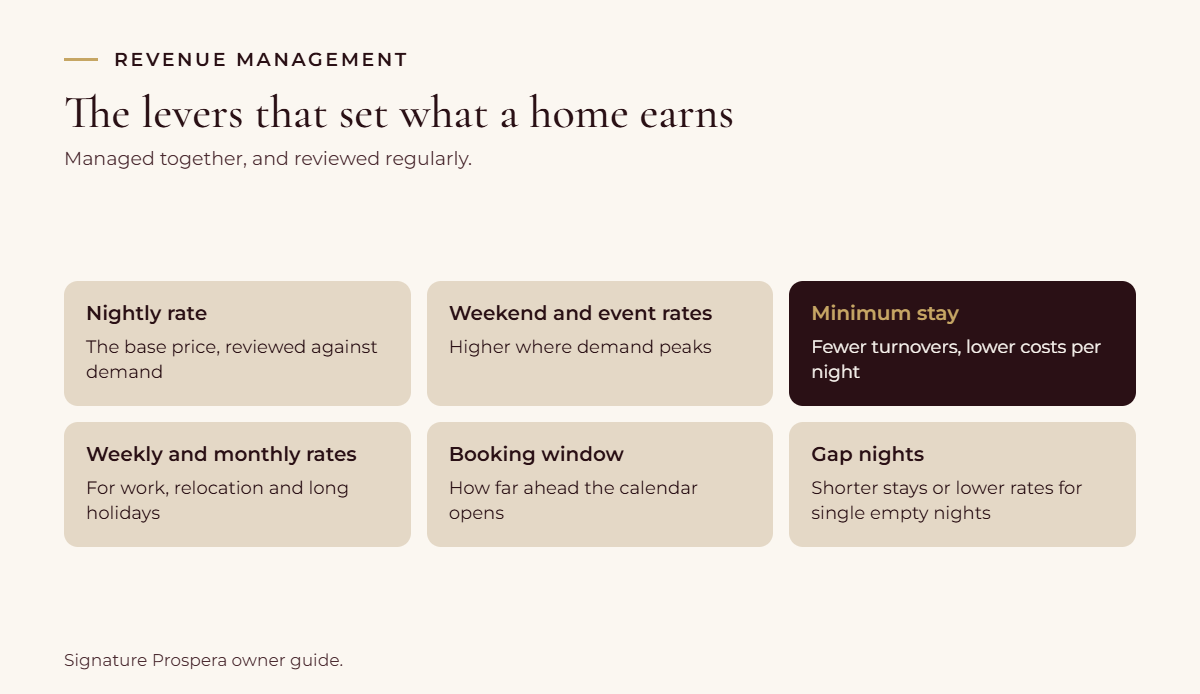
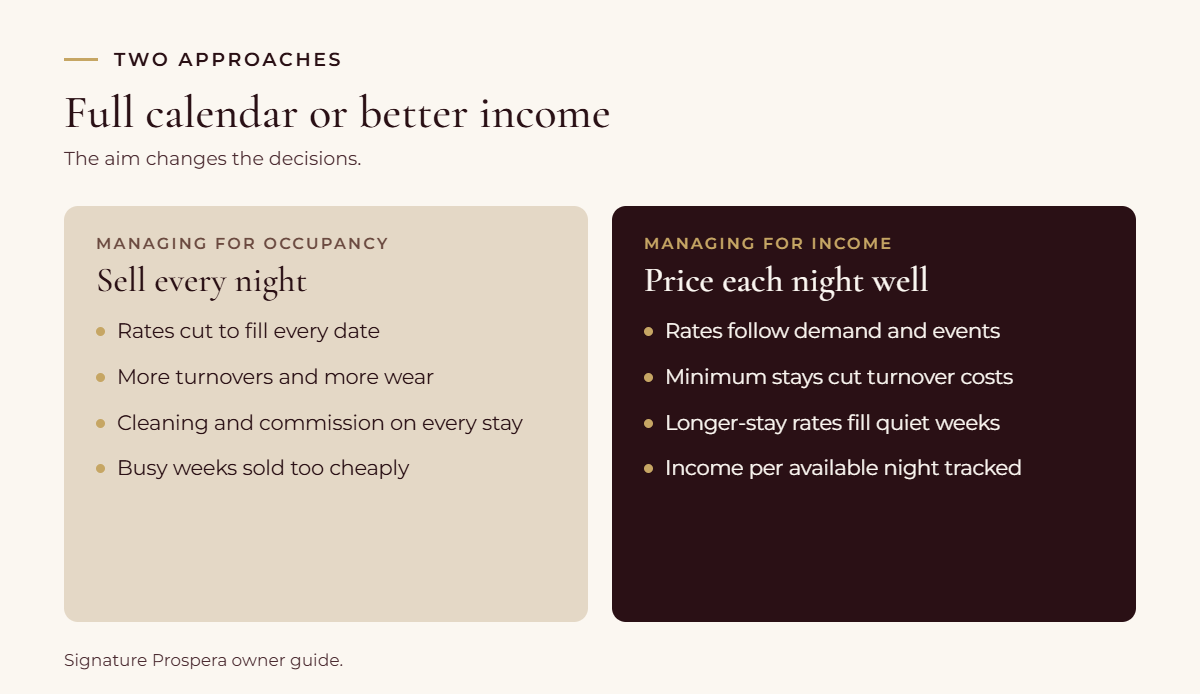
Two homes with the same occupancy can earn very different amounts. One sells every night cheaply; the other fills fewer nights at better rates and spends less on turnovers. Revenue management is the discipline of finding the right balance for your home. It covers the nightly rate, the minimum stay, the rates for longer stays and how far ahead you open the calendar.
How Demand Moves in Dubai
Demand for short stays in Dubai changes through the year. The cooler months, roughly October to April, usually bring more visitors. Major events, exhibitions and public holidays can push demand up for a few days at a time, and quieter summer weeks need a different approach.
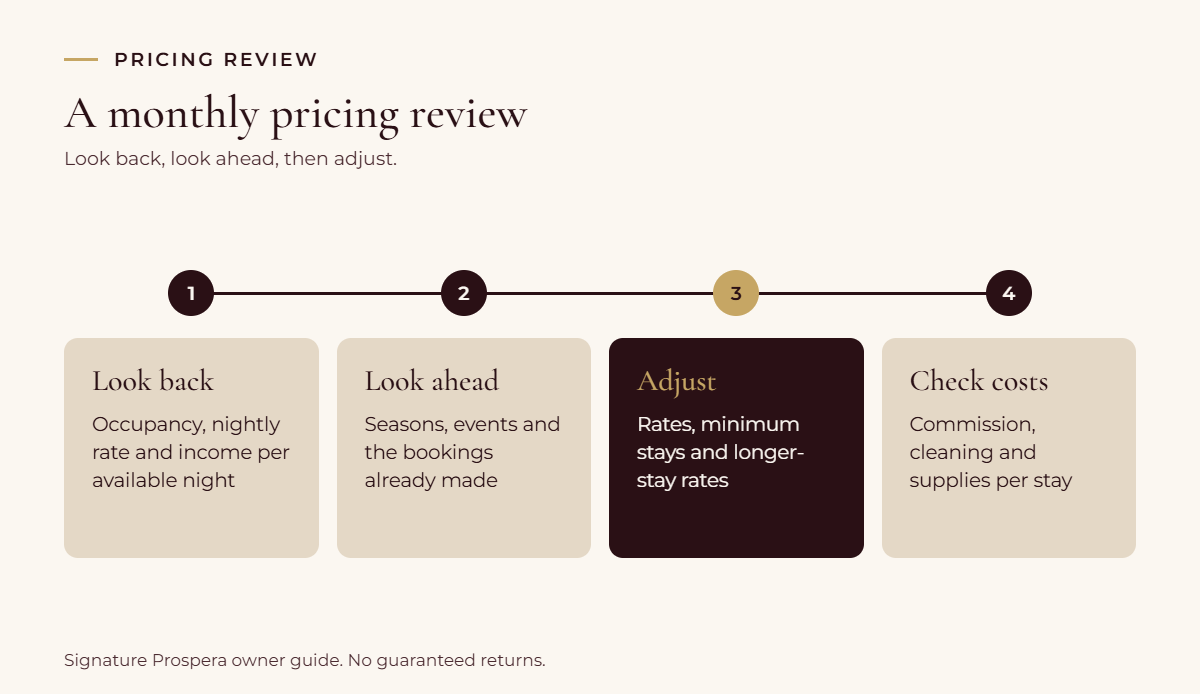
A fixed nightly rate earns too little in busy weeks and leaves the calendar empty in quiet ones, so rates are reviewed regularly rather than set once a year. Prices shown on booking platforms tell you what hosts are asking, not what guests paid; our guide on checking the rental potential of a Dubai property explains why booked rates for similar units are the sounder guide.
The Numbers to Watch
Look at these together. Higher occupancy at a much lower rate can leave you with less, and a high rate on few nights can do the same.
| Measure | What it tells you | How it is worked out |
|---|---|---|
| Occupancy | How much of the calendar was booked | Booked nights divided by available nights |
| Average nightly rate | What guests paid per night | Rental income from stays divided by booked nights |
| Income per available night | Rate and occupancy in one figure | Rental income divided by available nights |
| Net income | What is left for you | Rental income minus commissions, cleaning, utilities, the management fee and other costs |
Minimum Stays and Longer-Stay Rates
Every booking brings a turnover: cleaning, laundry and supplies. A minimum stay of two nights or more reduces the number of turnovers. Weekly and monthly rates attract guests in Dubai for work, relocation or a long holiday, which helps fill quieter weeks. Signature Prospera applies a minimum two-night stay to every booking.
Gap nights, the single empty nights between two bookings, are hard to sell. A shorter minimum stay or a lower rate for those dates only can fill them without changing the rest of the calendar.
Costs Belong in Every Pricing Decision
A booking is only worth what is left after its costs. Each platform takes its own commission, and our guide to where to list your Dubai holiday home sets out what the main platforms charge hosts. Cleaning, linen and supplies come with every stay. The Tourism Dirham is charged to guests per bedroom, per night, so it does not come out of your rate, but it must be collected and paid to DET/DTCM.
Our guide to what holiday home management fees in Dubai include covers the other costs line by line.
What to Ask a Manager About Pricing
- How often are rates reviewed, and on what data?
- Do you manage for income or for occupancy?
- Which minimum stays and longer-stay rates will you use, and when?
- Are booked rates for similar units in my building part of the review?
- Where will I see pricing decisions in my reports?
The answers should show up in the reporting. Our guide to how owner payouts and reporting work explains what each report should show.
How Signature Prospera Manages Revenue
We review nightly rates against demand, seasons and events in Dubai, and manage for revenue, not just occupancy. For quieter dates we use weekly and monthly rates, corporate and relocation stays and adjusted minimum stays. You see bookings, occupancy, pricing and income in a revenue update every 15 days, and a full Statement of Accounts by the 5th of each month.
Before you start, our pricing report compares your unit with real booked rates for similar apartments in your building and gives you a low, an expected and a high case in writing. Read what Airbnb management covers and how we manage listings, see our Airbnb management in Dubai service, or book a free rental assessment.
More Airbnb Management Guides
Frequently Asked Questions
What is Airbnb revenue management?
It is the work of setting and adjusting nightly rates, minimum stays and longer-stay rates so a home earns the most from its nights, rather than simply filling the calendar.
How often should Airbnb prices change in Dubai?
Regularly. Demand moves with the seasons, events, exhibitions and public holidays, so rates are reviewed often rather than set once a year.
Is higher occupancy always better?
No. Selling every night at a low rate can leave you with less than fewer nights at better rates, because each stay also brings cleaning, supplies and commission costs.
What minimum stay should a Dubai Airbnb use?
It depends on the home and the season. A minimum of two nights or more reduces turnover costs; Signature Prospera applies a minimum two-night stay to every booking.
When is the busy season for Airbnb in Dubai?
The cooler months, roughly October to April, usually bring more visitors. Major events, exhibitions and public holidays can push demand up for a few days at a time.
Can a manager promise how much my Airbnb will earn?
No manager can promise a figure, because income depends on the unit, its building and the time of year. Signature Prospera gives a low, an expected and a high case in writing, based on booked rates for similar units.
Sources
- Dubai Legislation Portal, Executive Council Resolution No. (2) of 2014 Approving the Tourism Dirham Fee, accessed November 2026
- Government of Dubai Media Office, Hamdan bin Mohammed approves second, larger AED1.5 billion economic incentives package, accessed November 2026
About the Author
Madhuri Chari is the Founder and CEO of Signature Prospera, which provides holiday homes operations management in Dubai and Sharjah. She built the company around an owner-first approach, drawing on years of work in brand strategy, client relations and operational leadership. Connect with her on LinkedIn.
This article is general information, not legal or financial advice.